



/Eploy-Team-3-News-banner.png?center=0%2C0&height=175&heightratio=1.915151515151515&width=336)
The importance of well‑executed and optimised recruitment marketing isn’t just increasing; it’s becoming a foundation to save costs and attract great candidates. Yet the teams seeing the greatest hiring success aren’t always the ones with the biggest budgets, but rather ones making the smartest use of the tools, data and brand assets they already have.
In this blog we explore:
- How employer branding fits into the wider recruitment marketing.
- What metrics are key to track for understanding your recruitment marketing strategy success.
- What is the recruitment funnel?
- What’s the difference between recruitment marketing and traditional recruiting?
Why Recruitment Marketing Matters More Than Ever
Despite the shrinking resources to attract talent, recruitment marketing isn’t going anywhere, and data makes the case clear:
- According to LinkedIn data, 70% of professionals are open to new opportunities, making it an ideal platform for recruitment marketing.
- 80% of HR leaders believe employer branding plays a significant role in their ability to attract talent.
- 82% of job seekers consider employer brand and reputation before applying for a job. Your social media platforms are the first place they’ll go, and if your employer brand is not being actively maintained, it’s not going to leave the best impression.
- Over 90% of candidates consider a company’s reputation before accepting a job offer. Recruitment marketing helps you build a positive reputation as an employer.
The conclusion is clear: recruitment marketing is no longer a “nice to have”. It’s how employers get found, get chosen, and ultimately secure the candidates that competitors also want.
Is employer branding the same as recruitment marketing?
Employer branding and recruitment marketing often get lumped together. Whilst they are both crucial parts of talent attraction, their purposes are different.
Employer branding primarily concerns the reputation and perception of an organisation. Having a successful employer brand is about creating a positive and attractive image of the company in the eyes of current and potential employees. It encompasses the overall culture, values, work environment, and the company's identity as an employer of choice. Employer branding establishes who you are as an employer and why candidates should choose you.
Recruitment marketing brings that brand to life, delivering it to the right people at the right time. It includes the strategies that an organisation uses to find, engage and attract candidates so they are eager to apply and stay engaged throughout the hiring process.
Think of employer brand as the story and recruitment marketing as the distribution strategy. When the two work together, TA teams achieve:
- Stronger awareness
- Being seen as Employer of Choice
- Potential cost reductions
- Faster talent attraction process
- Reduced reliance on paid media and agencies
What metrics reveal how effective your recruitment marketing is?
Whilst the below recruitment metrics are highly relevant in a broader hiring spectrum, they also reveal a lot of information about your recruitment marketing strategy and candidate sourcing channels.
Application‑to‑Hire Ratio
Application to Hire ratio is a versatile metric that can give insight into your recruitment advertising effectiveness as well as indicate the amount of time you will need to spend recruiting for specific roles, job types, locations and so on.
In the context of recruitment marketing, this metric showcases whether your top of funnel attraction is producing quality, not just volume. It helps identify which channels deliver candidates who actually progress and are worth investing budget in.
Cost of Hire
Cost of Hire is a great way to indicate return on investment (ROI) for your sourcing channels. It helps understand which channels are too expensive for the results they drive, where to cut spend and where to reinvest.
Candidate Source
Candidate Source metrics can help you identify the best places to advertise to find the right candidates for your jobs, so that you can maximise your return on recruitment marketing investment. It highlights which channels deliver quantity and quality candidates, supporting data-driven budget decisions.
/CookbookSocialPostA.jpg?center=0%2C0&height=209&heightratio=1.794392523364486&width=375)
Turn data into action
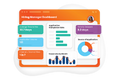
Having full insight into all aspects of your recruitment process is vital in the quest for hiring perfection. Download the full Recruitment Metrics Cookbook today and get access to an extensive list of metrics and how to calculate them.
Understanding the Recruitment Funnel
Candidates don’t move linearly anymore. Some drop in and out. Some engage months before ever applying. Some never apply at all but return later as “warm” prospects.
A modern recruitment marketing funnel typically includes:
- Awareness - A candidate learns that your organisation exists and forms an initial impression.
- Consideration - They consume content, browse your careers site, check social media, or explore reviews.
- Conversion - They join a talent pool, sign up for job alerts, or apply for your vacancy.
- Advocacy - Successful hires amplify your brand, creating a cycle of organic attraction.
Teams performing strongly in 2026 are those nurturing all four stages, not just the last one.
Recruitment Marketing vs. Traditional Recruiting
| Aspect | Recruitment Marketing | Traditional Recruiting |
| Primary Focus | Attracting and engaging potential candidates before they apply (talent pool). | Filling open roles as they become available. |
| Approach | Proactive, long‑term, pipeline‑building and engagement. | Reactive; begins when a vacancy appears. |
| Audience | Passive and active candidates (wide funnel). | Mainly active job seekers. |
| Key Activities | Content creation, employer branding, social and email campaigns, SEO job ads, nurturing talent pools, job alerts. | Posting jobs, screening applicants, working with hiring managers, interviewing. |
| Tools Used | ATS, Career site optimisation, CRM, analytics, social media tools, email nurture campaigns. | ATS, job boards, recruiter networks and agencies. |
| Goal | Generate sustained interest and attract high‑quality candidates over time. | Fill the immediate hiring need when required. |
| Metrics | Talent engagement, talent pool quality, brand awareness, conversion rates, pipeline growth. See example below. | Time‑to‑hire, cost‑per‑hire, quality‑of‑hire. Often no metrics/measurement. |
| Candidate Journey | Begins at awareness, shaping perceptions before applying and building employer credibility. | Begins at application. |
| Value to Organisation | Strengthens employer brand and reduces dependency on paid channels and agencies. | Ensures roles are filled and hiring processes move forward. |
| Typical Output | Warm, nurtured talent pipelines and increased inbound applications with engaged new hires. | Shortlists, interviews, and hires. |
Example: Metrics
Recruitment Marketing Example:
You track engagement from a talent newsletter campaign - open rates, click‑throughs, traffic to job pages, and the number of leads added to your ATS.
Traditional Recruiting Example:
You measure time‑to-hire for each vacancy and compare it to the team's SLA (e.g., closing a role within 30 days).
/Eploy-Demo-Video-5050-img-text.png?center=0%2C0&height=209&heightratio=1.794392523364486&width=375)
See Eploy in Action
Short on time? Get a quick insight into Eploy with our demo recording. You'll see:
- A guided tour of the Eploy ATS.
- Walkthrough of a typical recruitment journey.
- Highlight of features and benefits.