





/Eploy-Taking-Notes-Card.png?center=0%2C0&height=175&heightratio=1.915151515151515&width=336)
According to data from the UK Candidate Attraction Report 2026, Careers Sites are used by 93% of organisations for candidate sourcing. Yet just 20% measure this sourcing channel on a regular basis. This presents an untapped opportunity for many TA teams that rely on Careers Sites to fill vacancies without truly understanding their performance. And in a labour market where recruitment marketing budgets are shrinking, not making the most out of a universally used channel becomes expensive.
In this blog we explore:
- The most used channel recruitment teams aren’t optimising
- If measuring your Careers Site performance matters
- What differentiates high-performing Careers Sites from the rest
- Where Careers Sites drive ROI
The Most Used Channel Recruitment Teams Aren’t Optimising
Although Careers Sites are widely used by recruiters, many organisations don't make the most of them. The most common function for a Careers Site is hosting vacancies. However, it is often the first touchpoint a candidate has with an employer, acting as a digital ‘shop window’ where top candidates decide whether they want to join your organisation. Job listings alone rarely do enough to convert interest into applications.
The 10th annual UK Candidate Attraction Report findings also back this up. For most organisations the Careers Site is seen as a passive, not strategic channel. Candidates are pushed there from job boards, LinkedIn or specific campaigns, however what happens next is rarely measured, tested or optimised for better outcomes.
This creates missed opportunities to attract high-quality talent. Your Careers Site isn’t just a destination, it’s where candidates often form their first real impression of your organisation and decide whether to apply. So if your most-used channel isn’t one of your best-performing, it raises a question: why?
Does Measuring Your Careers Site Performance Matter?
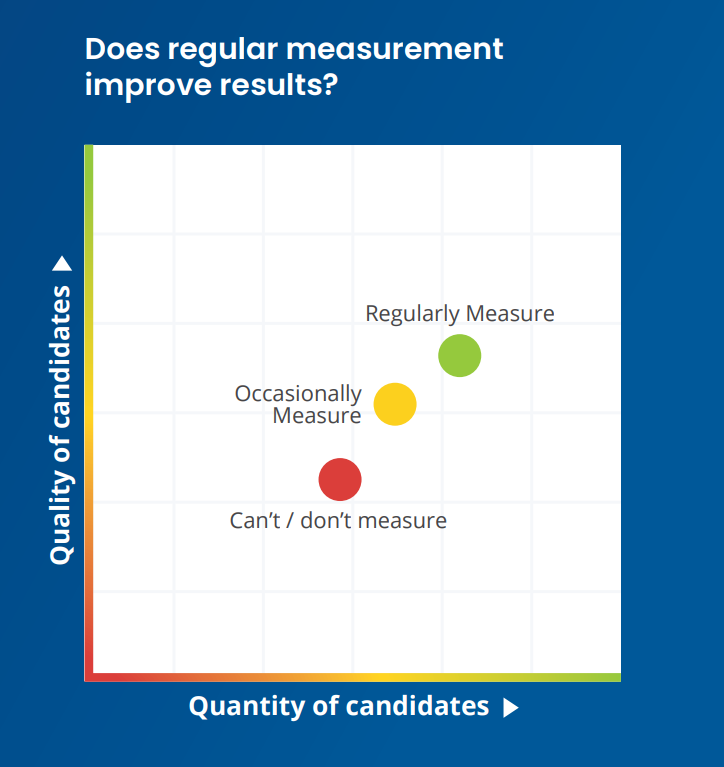
The Careers Website is the most universally used channel in the entire sourcing mix, yet it sits in the mid-range of both candidate quality and volume scores. This apparent paradox, near-universal use but mid-ranking performance, highlights a critical gap in how Careers Sites are being used.
With 93% usage and just 20% regular measurement, there is a clear opportunity for organisations to better understand how their Careers Site is performing, and to invest in the content and functionality that improves both application quality and volume. The recruiters who regularly measure the effectiveness of their Careers Sites report noticeably better results compared to those who don’t measure at all or only review performance occasionally.
What High-Performing Careers Sites Actually Do Differently
When you compare high-performing Careers Sites against the rest, the differences aren’t subtle. High-performing sites aren’t just better designed, they also place candidate experience at the forefront through relevant, candidate-first content that’s easily accessible at every touchpoint.
Peak-performing Careers Sites are:
- 9× more likely to include Interview Hints & Tips
- 3× more likely to explain how the recruitment process works
- 2× more likely to include employee stories, benefits and learning content
- 2× more likely to share information on Rewards & Benefits
- 2x more likely to have useful FAQs
Having this content in place helps candidates see your organisation as an employer of choice. It gives them the clarity they need to understand the opportunity, picture themselves in the role and prepare in advance, reducing uncertainty and building confidence.
It helps the Careers Site not only show your culture, values and opportunities, but also answer what candidates are actually thinking:
- What will this process feel like?
- How do I prepare?
- Will I belong here?
- Is this worth my time?
That’s why something as simple as interview guidance can be so powerful. It signals transparency, respect, and intent, all before the application is even submitted.
The Real ROI: Where Careers Sites Drive Value
Because Careers Sites are rarely measured, their impact is often underestimated. Yet once broken down, the ROI shows up in multiple places:
Higher-quality applications
When candidates don’t fully understand the role or organisation, self-selection becomes less effective and application quality drops. This leads to higher volumes of misaligned applicants, increasing time to hire and reducing efficiency.
For already stretched TA teams, this doesn’t just slow things down, it creates unnecessary work at every stage of the hiring process.
Better conversion rates
A Careers Site visit is a moment of intent. A high-performing, candidate-focused site reduces friction, keeps candidates informed, engaged, and moves them from interest to action.
Lower cost-per-hire
If your Careers Site converts more effectively, recruitment teams can:
- Rely less on paid channels
- Cut spend on poor performing sourcing channels
- Reduce reliance on agencies
In a year where budgets are tightening across many sectors, making the most of the channels you already have becomes even more important.
Stronger employer brand
Your Careers Site is often the first place candidates form an impression of your organisation. That makes it a critical channel for demonstrating what sets you apart. Not just through job listings, but through a clear, transparent and engaging candidate experience that brings your employer brand to life.

Download the UK Candidate Attraction Report 2026
Explore the biggest sourcing challenges, priorities and channel performance insights shaping recruitment this year, including which channels deliver the best results for candidate quality and volume, and how TA teams are responding to the rise of AI in hiring.
Want to see Eploy in action? Watch the Eploy demo for a guided walkthrough of the ATS, including how to streamline your recruitment process, improve visibility, and reduce admin at every stage, from attraction to onboarding.
Eploy FAQ
Answers to Frequently Asked ATS Questions